A closer look at PinLeads.
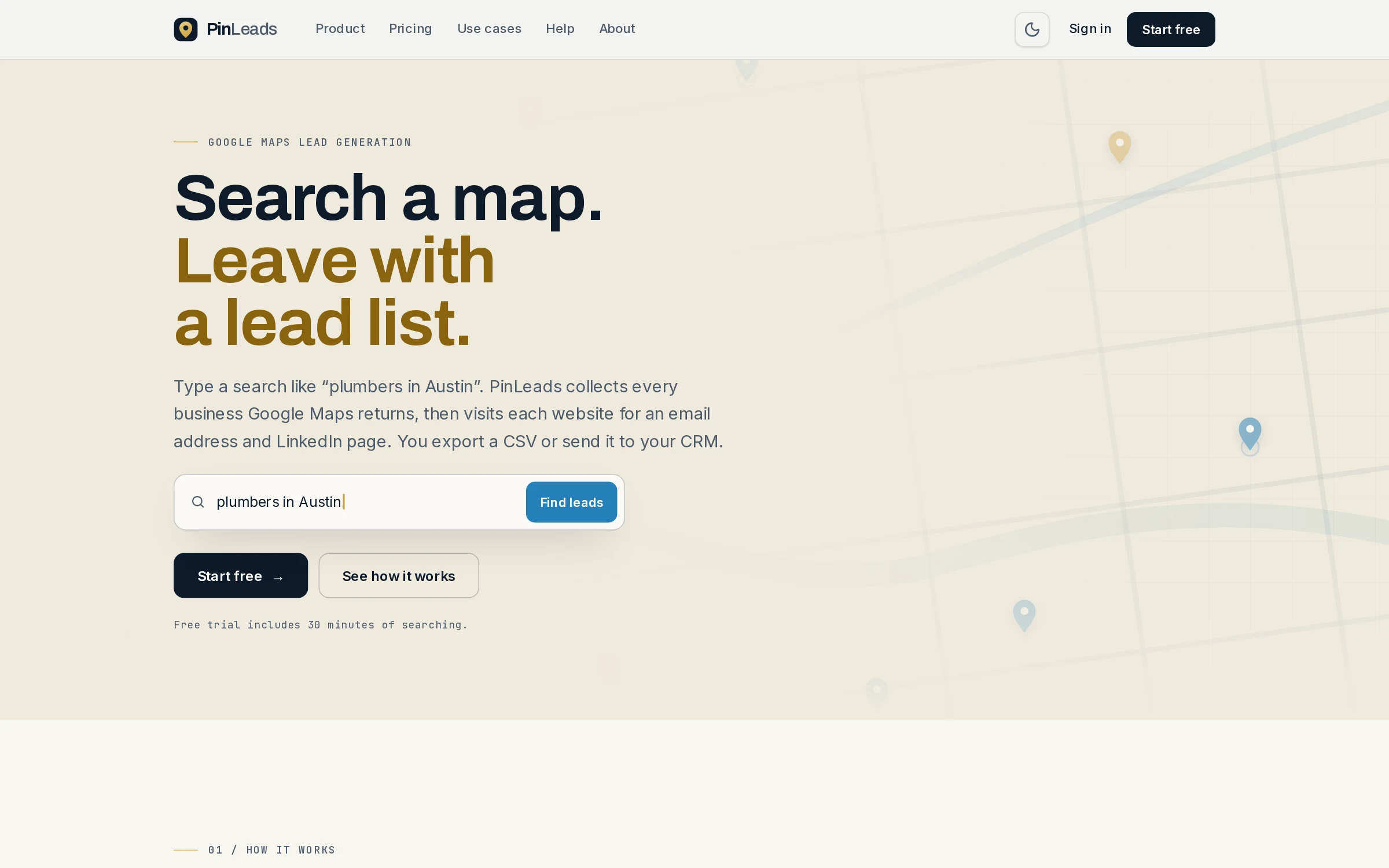
PinLeads brings prospect research and outreach into one workspace. A user enters a business type and location, pastes a Google Maps search link, or uploads a spreadsheet of searches. The application collects business listings, visits their websites for published email addresses and LinkedIn links, and turns the results into contact records that can be filtered, exported or organized into audiences.
The challenge
Teams prospecting local businesses often copy details from Maps, open each website to look for an email address, then move the same records through spreadsheets and outreach tools. That work needs a reliable handoff from collection to a saved audience, with clear limits on search time, account access and sending.
The product experience
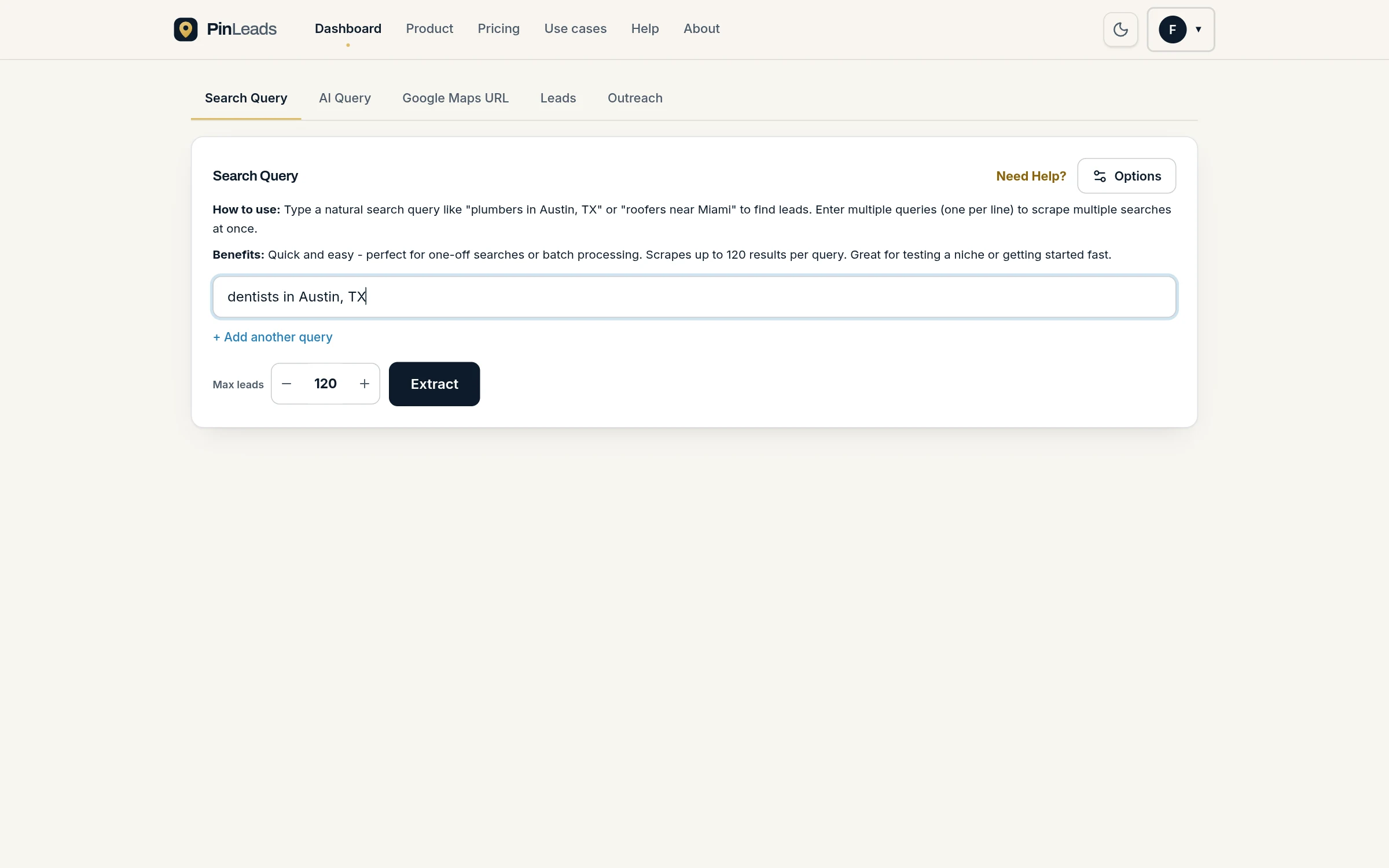
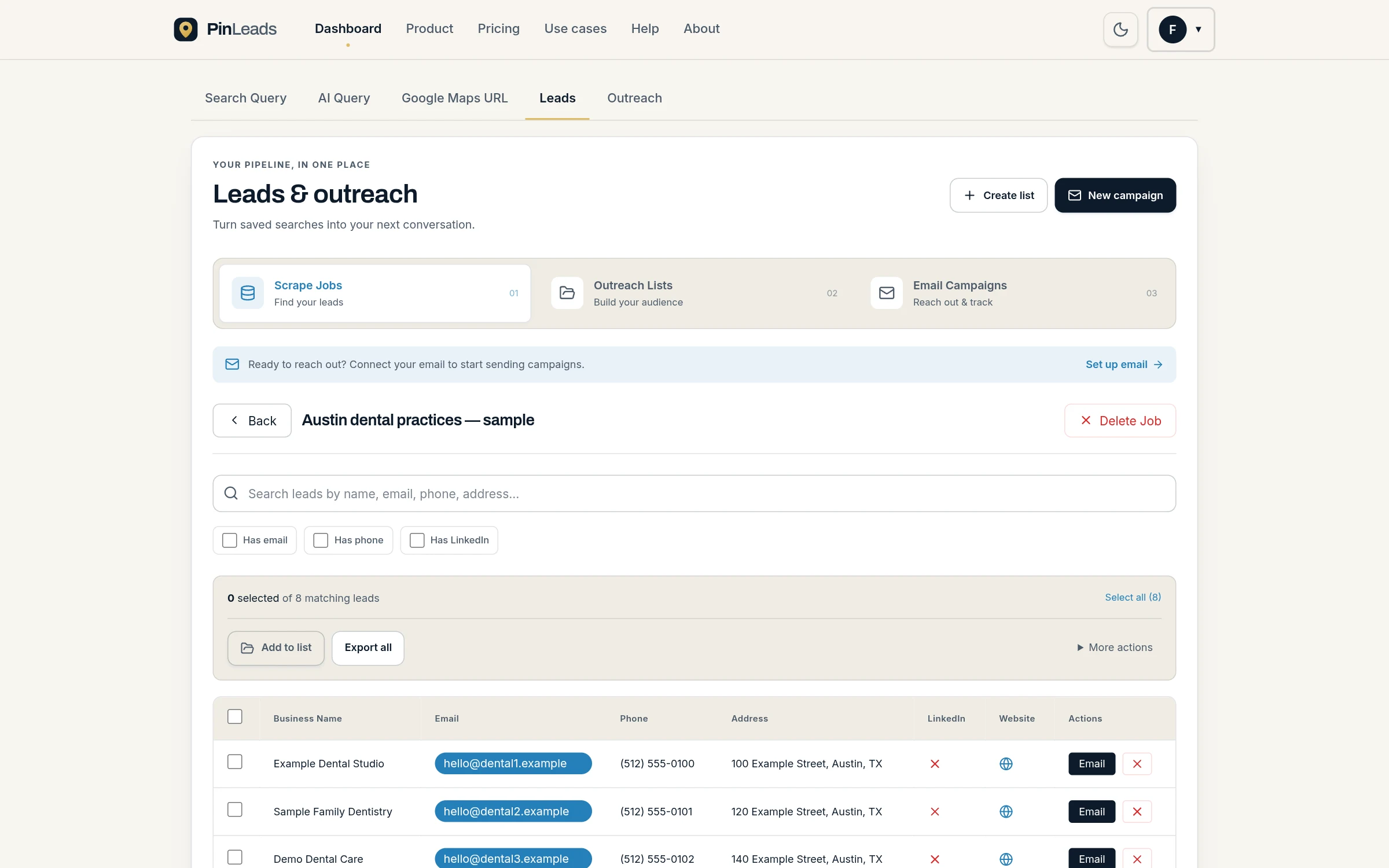
The search workspace accepts queries, Maps URLs and spreadsheet batches, shows progress as records arrive, and lets the user choose contact and business filters. Saved searches feed a Leads workspace with searchable results, outreach lists and campaign activity. Users can export CSV files, sync contacts through HubSpot or Zapier, or prepare personalized email campaigns through a configured sending provider. Audience selection, message setup and the final send review remain distinct steps.
- A live workspace covering Maps searches, website contact collection and saved leads.
- A separate reviewable path from saved results to outreach lists and email campaigns.
- CSV exports and HubSpot and Zapier integrations; no conversion, revenue or customer-performance claims are made.
Product & engineering
A Next.js and React interface sits in front of an Express API. Puppeteer browser workers collect Maps results and visit public business websites, while PostgreSQL holds saved lead records and outreach data. Firebase provides account identity, and Stripe subscription events control plan access and search allowances. AI planning translates a description into bounded Maps queries; actual collection and campaign actions run through the application’s existing authenticated services.
The decisions that shape the work
Separate the search from the saved audience
A scrape job retains its results; users select and filter those records into outreach lists instead of having every search immediately trigger a campaign.
Make usage and plan access explicit
Search time, paid features and team access are checked by the service. A trial is a fixed allowance, and subscription changes do not depend on a browser-only plan label.
Keep outreach deliberate
Sender connections, templates, audience selection and scheduling are reviewed before campaign creation. Unsubscribe handling and delivery records remain part of the sending workflow.
Keep the contact record useful beyond the search
CSV export and CRM integrations let a team carry selected leads into its existing sales workflow rather than locking them into the scraper.
Working within the constraints
- Contact fields depend on what each business publishes. A listing does not guarantee an email address, a LinkedIn page, contact accuracy or permission to send marketing.
- AI lead search is a beta feature that translates requests into searches and filters; users need to review its choices.
- The free plan is a one-time 30-minute search trial. Paid features, usage time and data retention depend on the plan; this is not an unlimited free service.
- Dashboard screenshots show the current application components with synthetic sample records, not private customer leads or evidence of customer results.
Have a similar challenge?
For agencies, sales teams and businesses that need a repeatable way to research local prospects and organize outreach without copying the same contact details across tools.
Talk about your project